
How the IT Industry Transformed Bangalore Real Estate in the Past 10 Years?
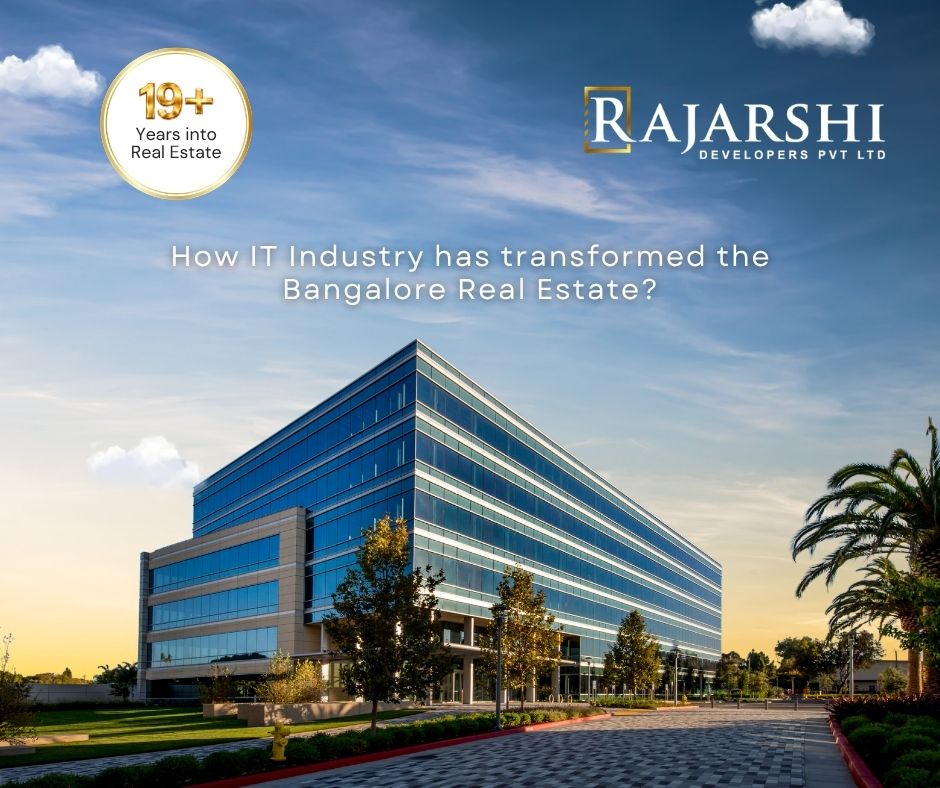
How the IT Industry Transformed Bangalore Real Estate in the Past 10 Years?
Introduction: The City That Built Wealth Alongside Code
Bangalore — or Bengaluru, as it is officially known — has quietly scripted one of the most extraordinary urban transformation stories in modern India. What was once celebrated as the Garden City, admired for its wide boulevards and colonial-era parks, has now earned a far weightier title: the Silicon Valley of India. And unlike many labels that are loosely applied, this one comes backed by hard numbers, real employment data, and a skyline that is changing by the quarter.
But here is the insight that most people miss: the technology revolution in Bangalore did not stay confined to server rooms and office campuses. It spilled over — into streets, neighbourhoods, land prices, and investment returns. The IT industry became the single most powerful force shaping the city’s real estate landscape over the last decade. Understanding this connection is not just academically interesting — it is the key to making smart property investment decisions in Bangalore today and in the decade ahead.
“In Bangalore, real estate does not move randomly. It follows the IT industry — and those who understand this relationship early are the ones who build lasting wealth.”
1. The IT Boom: The Engine Behind Real Estate Growth
Bangalore’s emergence as India’s largest technology hub was not accidental. Decades of deliberate policy, educational investment, and private sector commitment turned the city into a magnet for global technology corporations. Today, names like Infosys, Wipro, Microsoft, Google, Amazon, Accenture, and IBM have massive operations here, collectively employing hundreds of thousands of professionals across sprawling tech parks and campuses.
The scale of this employment engine is staggering. Bangalore contributes the largest share of India’s IT exports. The sector generates not just direct jobs but an enormous ecosystem of ancillary employment — from food delivery and logistics to retail, hospitality, and construction. Every new office that opens brings with it a wave of housing demand, infrastructure pressure, and neighbourhood transformation.
For real estate, this meant a structural, demand-driven market rather than a speculative bubble. Unlike cities where property prices rise on sentiment, Bangalore’s growth is anchored in stable, high-income employment — which makes it resilient even during global economic uncertainty.
- Consistent job creation across IT, GCC, and startup ecosystems
- High average salaries enabling premium and mid-market housing demand
- Multinational presence ensuring long-term business continuity in the city
- Startup culture generating younger, aspirational buyer segments
2. The IT Boom: The Engine Behind Real Estate Growth
One of the most consequential side effects of the IT boom is large-scale professional migration into Bangalore. Every single year, tens of thousands of engineers, managers, data scientists, and support professionals relocate to the city from states across India — from Tamil Nadu, Andhra Pradesh, Kerala, Maharashtra, and beyond.
This migration is not a temporary trend. It has been ongoing and consistent for more than two decades, and it shows no sign of reversing. If anything, the expansion of Global Capability Centers (GCCs) and the growth of AI-driven industries is accelerating this influx. And with every new arrival comes a dual demand cycle that keeps Bangalore’s real estate market perpetually active.
The Dual Demand Cycle:
- Short-term renters: Fresh graduates and early-career professionals seeking rental apartments near their workplace
- Long-term buyers: Mid-career employees with savings, stability, and the desire to own property in a city they now call home
This is why Bangalore is among the very few cities in India that almost never experiences a prolonged demand collapse. The market gets continuously replenished. Even during the post-pandemic slowdown, Bangalore’s residential absorption remained among the highest in the country.
“Bangalore absorbs a continuous wave of skilled professionals every year — and each one of them needs a place to live, creating a self-renewing demand cycle that supports prices across all micro-markets.”
3. Birth of IT Corridors: When Micro-Markets Became Wealth Generators
Perhaps the most visible and dramatic transformation the IT sector triggered was the rise of dedicated IT corridors across the city. Before the tech boom, most of these areas were peripheral, underdeveloped, or simply unknown. Today, they are among the most sought-after real estate addresses in the country.
The logic driving this transformation is elegantly simple: people want to live as close as possible to where they work. When tens of thousands of employees are concentrated in a tech park or office cluster, the residential demand radiating outward from that zone is enormous. Developers followed the jobs. Infrastructure followed the people. And property prices followed the infrastructure.
Key IT-Driven Micro-Markets in Bangalore:
- Whitefield — Home to ITPL, Manyata’s eastern corridor, and countless MNC campuses
- Electronic City — The original IT hub, still going strong with major employers
- Outer Ring Road (ORR) — The spine connecting east and south Bangalore’s tech ecosystems
- Sarjapur Road — A multi-directional corridor accessing Whitefield, ORR, and Electronic City
- HSR Layout — Bangalore’s startup capital, now a premium residential zone
- Hebbal & Yelahanka — Benefiting from both north Bangalore IT expansion and airport proximity
These areas did not just appreciate in price — they transformed in character. Farmland became gated communities. Village roads became arterial IT corridors. The transformation happened in under a decade, and those who invested early captured extraordinary returns.
4. Price Appreciation: The Numbers That Tell the Real Story
Numbers do not lie, and in Bangalore, the numbers over the last decade paint a remarkable picture of wealth creation driven by IT-fuelled real estate growth.
For plotted land investors specifically, appreciation has been even more dramatic in emerging corridors like Sarjapur-Attibele, Devanahalli, and the Peripheral Ring Road belt — areas where Rajarshi Developers Pvt. Ltd. actively operates and has curated investment-grade projects.
5. The Rental Market: The Silent Goldmine of Bangalore Real Estate
While the headlines celebrate capital appreciation, Bangalore’s rental market has been quietly generating consistent wealth for property owners — year after year, with minimal downtime.
With a continuous influx of IT professionals who need immediate accommodation upon relocation, the city maintains persistently high rental occupancy. Vacancy rates in established IT micro-markets are remarkably low. And with demand consistently outpacing new supply in prime zones, rental yields in Bangalore are among the highest of any major Indian metro.
- 2BHK rentals in premium IT corridors have surged dramatically over five years
- Rental income often provides 4–6% annual yield on property value
- Co-living and managed accommodation models are further professionalising the rental market
- Hybrid work culture has sustained demand even as remote work options expanded
For investors, this dual advantage — capital appreciation plus rental income — is what makes Bangalore real estate particularly compelling. You earn while you hold, and the asset appreciates as you earn.
6. Infrastructure Development: Built to Serve the IT Workforce
The IT industry’s growth forced Bangalore to invest in infrastructure at a scale the city had never seen before. And here is the key insight: every infrastructure upgrade directly translates into real estate value appreciation in its vicinity.
Major Infrastructure Developments:
- Namma Metro expansion — connecting IT corridors, reducing commute times, and unlocking residential value
- Outer Ring Road upgrades — enabling seamless movement across east and south Bangalore
- Kempegowda International Airport expansion — catalysing north Bangalore’s transformation
- Peripheral Ring Road (PRR) — a 65-km access-controlled corridor connecting all major city zones
- Satellite Town Ring Road (STRR) — a 280-km highway linking satellite towns to the city
- Signal-free corridors and flyovers around tech parks
Each of these projects creates a ripple effect: improved connectivity leads to increased demand, which supports price growth, which attracts more development, which draws more residents. It is a virtuous cycle — and it is very much in motion right now in corridors like Devanahalli, Sarjapur-Attibele, and Kengeri.
7. Emerging Hotspots: Where the Next Decade of Growth Is Being Set Up
A decade ago, areas like Sarjapur Road, Devanahalli, and Attibele were considered too peripheral for serious investment consideration. Today, they are the corridors attracting the most attention from both institutional investors and individual buyers. This pattern is important to understand: by the time a location becomes ‘obvious,’ the early-entry advantage is largely gone.
The next wave of Bangalore’s real estate growth is already being set up in corridors that combine three key ingredients: IT expansion, infrastructure development, and relative affordability.
Emerging Hotspots:
- Sarjapur – Attibele Belt — Positioned at the intersection of three major IT employment zones, with metro extension and PRR connectivity expected
- North Bangalore (Devanahalli, Yelahanka, Hebbal) — Airport-driven growth, GCC expansion, and upcoming metro connectivity
- East Bangalore Periphery (Malur, Hoskote) — Industrial growth, proximity to Electronic City, and aggressive infrastructure investment
- Kengeri – West Bangalore — Metro connectivity unlocking residential potential in a previously overlooked corridor
These are the zones where patient, informed investors are positioning themselves today for compounding returns over the next 5–10 years. This is precisely why Rajarshi Developers Pvt. Ltd. has been establishing plotted development projects across these corridors — to give investors access to early-stage opportunities with strong fundamentals.
8. Commercial Real Estate Explosion: A Self-Sustaining Ecosystem
The IT sector didn’t just reshape residential real estate — it triggered a wholesale transformation of commercial property in Bangalore. Major employment hubs like Manyata Tech Park, Bagmane Tech Park, RMZ Ecoworld, and Embassy Tech Village emerged as self-contained business cities within the city.
This commercial expansion created a powerful reinforcing loop. More offices attracted more employees. More employees needed more housing. More residents drove demand for retail, hospitality, and ancillary services. The entire ecosystem became self-sustaining — with residential and commercial real estate feeding each other’s growth.
- Co-working spaces proliferated due to startup culture and hybrid work models
- Retail and mall development accelerated in and around IT corridors
- Hospitality sector expanded to serve business travellers and corporate stays
- Industrial and warehousing demand grew around the city’s peripheral zones
9. The New Buyer: From End-User to Strategic Investor
Perhaps the most culturally significant shift the IT boom triggered is in how Bangalore’s residents think about property. IT professionals, with their higher-than-average incomes, stock options, and financial literacy, were quick to recognise real estate as an effective hedge against inflation and a reliable vehicle for long-term wealth creation.
- Demand for ready-to-move and near-completion homes surged post-pandemic
- Plotted land became a preferred investment class for high-earning professionals
- Investment in peripheral areas increased as core zone prices became inaccessible
- NRI investment from the Bangalore diaspora grew substantially
At Rajarshi Developers Pvt. Ltd { https://rajarshidevelopers.com/ }., we have seen this shift firsthand. An increasing proportion of our buyers are IT professionals who are not buying to live — they are buying to build wealth. And plotted land, with its flexibility, appreciation potential, and lower maintenance burden, has become their preferred vehicle.
10. Lifestyle Transformation: Real Estate Reimagined for the Digital Workforce
The modern IT professional’s expectations from a home or a plotted community have evolved dramatically. The new standard includes:
- High-speed fibre connectivity as a baseline requirement, not a premium feature
- Dedicated work-from-home spaces within homes and communities
- Clubhouses, wellness centres, and recreational facilities within gated projects
- Smart home features including automated security, energy management, and remote access
- Green spaces and sustainability features driven by environmental awareness
- Proximity to quality schools, hospitals, and daily convenience facilities
At Rajarshi Developers, every plotted development project is planned with these expectations in mind. Our layouts are not just parcels of land — they are master-planned communities designed to support the lifestyle of Bangalore’s modern professional.
11. Challenges on the Road to Growth
No transformation of this scale comes without friction. Being aware of these challenges is essential for making informed investment decisions.
Affordability Pressure Property prices in core IT corridors have risen faster than income growth for many segments of the population. This is also why plotted land in emerging corridors — which offers a lower entry point with strong appreciation potential — has become so popular among aspirational buyers.
Traffic Congestion The concentration of employment in specific corridors like the ORR has created severe traffic congestion during peak hours. Investors should factor commute time and connectivity into location decisions, favouring areas with clear infrastructure timelines.
Infrastructure Lag In the fastest-growing peripheral zones, physical infrastructure sometimes struggles to keep pace with development. This is why working with a reputable developer — one who selects locations with existing or confirmed infrastructure commitments — is critical.
Segment Imbalances While premium and upper-mid segments of the market are well-supplied, the affordable housing segment remains undersupplied relative to demand. This highlights the importance of micro-market-level research before investment.
12. The Future: A Decade of Compounding Lies Ahead
If the last decade was about growth, the next decade will be about compounding. The structural forces that drove Bangalore’s real estate transformation are not weakening — they are strengthening.
- Global Capability Centers (GCCs): Over 1,700 GCCs operate in India, with Bangalore hosting the largest share. This number is projected to grow significantly, adding tens of thousands of high-paying jobs annually.
- Artificial Intelligence and Deep Tech: Bangalore is positioning itself as India’s AI capital, with new research labs, AI campuses, and technology accelerators being established across the city.
- Semiconductor and Hardware Manufacturing: Government incentives are attracting semiconductor manufacturing to the Bangalore-Mysore corridor, creating entirely new employment clusters.
- Integrated Townships: The future of real estate in Bangalore will be self-contained, master-planned townships combining residential, commercial, retail, and recreational zones.
- Peripheral Expansion: As core zones saturate, growth will compound in peripheral belts — Malur, Hoskote, Chikkaballapura, Devanahalli — where land is still available at investment-grade prices.
For investors who understand this trajectory and position themselves in the right corridors today, the next decade offers the kind of compounding wealth creation that the early Whitefield and Electronic City investors enjoyed in the previous one.
About Rajarshi Developers Pvt. Ltd.
Rajarshi Developers Pvt. Ltd. { https://rajarshidevelopers.com/ } is one of Bangalore’s trusted names in plotted land development, operating across the city’s highest-potential investment corridors. Our projects span Whitefield, Sarjapur-Attibele, Kengeri, and Devanahalli — giving investors diversified access to Bangalore’s most compelling growth stories.
What sets Rajarshi apart is our approach: we don’t just sell plots. We identify the right stage of each corridor’s growth cycle, secure land with clear legal titles and RERA compliance, and develop master-planned layouts that are built for long-term appreciation.
Why Investors Choose Rajarshi Developers:
- RERA-compliant, legally clear plotted developments across Bangalore’s growth corridors
- Early-stage access to locations before mainstream awareness drives prices up
- Transparent pricing with no hidden costs or post-sale surprises
- Master-planned layouts with roads, drainage, and essential amenities in place
- A track record of delivering projects on schedule with documented appreciation
- Dedicated support from site selection through registration and beyond
Whether you are a first-time land buyer, an IT professional seeking to build long-term wealth, or an experienced investor adding to a real estate portfolio, Rajarshi Developers has a project designed for your goals.
Explore our current projects: https://rajarshidevelopers.com/projects/ongoing-projects/rajarshi-golden-enclave/
Frequently Asked Questions (FAQ)
How has the IT industry directly impacted property prices in Bangalore?
The IT industry created a massive, stable employment base in Bangalore that drives consistent housing demand. High-earning IT professionals fuel both the purchase and rental markets, supporting price growth. Over the last five years alone, average property prices across Bangalore rose by approximately 57%, with select IT corridors like Whitefield and Sarjapur Road recording appreciation of up to 79%. This growth is demand-driven — not speculative — making it structurally durable.
Which areas of Bangalore have benefited the most from IT-driven real estate growth?
Whitefield, Electronic City, the Outer Ring Road belt, Sarjapur Road, and HSR Layout have historically been the biggest beneficiaries. In the current cycle, Sarjapur-Attibele, Devanahalli, North Bangalore (Hebbal, Yelahanka), and the Peripheral Ring Road belt are emerging as the next high-growth zones, driven by IT expansion, GCC growth, and major infrastructure investments.
Is investing in plotted land in Bangalore still a good idea in 2025–26?
Verify the MPA layout approval number. Confirm the plot falls within an MPA-approved layout boundary. Check that the layout’s zone classification matches your intended use. Confirm that infrastructure provisions are part of the approval conditions.
These four steps take less than a day and can protect your investment for decades.
What makes Sarjapur Road and Attibele attractive for land investment right now?
The Sarjapur-Attibele corridor sits at the geographical intersection of three major IT employment clusters — Whitefield, Electronic City, and the ORR belt — making it one of the most strategically located investment zones in the city. Upcoming metro extensions, the Peripheral Ring Road, and institutional investor interest signal strong future appreciation. Current prices are still accessible, making entry timing particularly favourable.
How does infrastructure development affect real estate values in Bangalore?
Every major infrastructure upgrade — a new metro line, a signal-free corridor, a ring road, or an expressway — directly increases the accessibility of nearby areas, which translates into higher property demand and values. In Bangalore, infrastructure projects are largely planned around IT corridors and employment zones, creating a predictable appreciation pattern for investors who track government announcements and timelines. Metro connectivity alone has lifted property values by 20–40% in some corridors.
What is the difference between investing in plots vs. apartments in Bangalore?
Plots generally offer higher long-term appreciation potential because land is finite and increasingly scarce in growing cities. They require no maintenance cost while held, offer flexibility in construction timing, and tend to be more liquid in growth corridors. Apartments offer immediate rental income and lower management effort. For wealth accumulation over a 5–10 year horizon, plotted land in emerging Bangalore corridors has historically delivered superior returns.
How do I evaluate whether a plot investment in Bangalore is genuine and safe?
Look for four key indicators: RERA registration, clear and unencumbered title with a proper title search going back at least 30 years, DC Conversion (agricultural land converted to residential use), and layout approval from BBMP, BDA, or the relevant planning authority. Working with an established developer like Rajarshi Developers { https://rajarshidevelopers.com/ }— who provides all documentation upfront and has a verifiable track record — significantly reduces legal and financial risk.
What is the future outlook for Bangalore real estate over the next decade?
The outlook is strongly positive, particularly for investors in the right corridors. The expansion of GCCs, the growth of AI and deep tech industries, semiconductor manufacturing investments, and major infrastructure projects like the PRR and STRR are all expected to sustain and accelerate demand. Peripheral zones that are currently emerging — Devanahalli, Malur, Hoskote, Chikkaballapura — are where early investors are likely to see the most significant compounding returns. Bangalore is shifting from a growth story to a compounding story.
Rajarshi Developers Pvt. Ltd. Bangalore’s Trusted Plotted Development Company www.rajarshidevelopers.com
Recent Posts